I am a native in this world And think in it as a native thinks
Showing posts with label ruins. Show all posts
Wednesday, July 23, 2025
Avebury
This charming village is about twenty minutes from Stonehenge. It was lovely to see green grass and flowers that aren't brown and dying, like most of those in Oxford this dry summer.
And the village sits in the middle of a henge and two stone circles that are much larger than Stonehenge—so large that I needed to look at aerial photographs to make any sense of it.
Sunday, July 20, 2025
Approaching Stonehenge
I have wanted to visit Stonehenge ever since I took some astronomy classes in college. It may or may not have functioned as a prehistoric observatory, or as a religious site, or as a place of healing—or, all of the above—but it had such a fascination for me. For years, at every solstice, I'd think, “I wish I were at Stonehenge.”
And when I caught this first glimpse of the stones through the bus window, I couldn't breathe for a moment. There's such a thrill in seeing a place you've seen pictures of all your life: the pyramids, Mont St-Michel, Machu Picchu, even the White House. Oh my God, there it is! I'm really here!
Labels:
England,
ruins,
Stonehenge,
tourist attractions,
UNESCO World Heritage
Sunday bird blogging
Those are starlings sitting on top of the stones, in case you can't tell from the picture, and you probably can't.
But I don't imagine I will ever get to post a picture of birds at Stonehenge again, so tiny starlings it is.
Labels:
bird blogging,
birds,
England,
ruins,
Stonehenge,
UNESCO World Heritage
Saturday, July 19, 2025
Tuesday, January 21, 2025
Natural and unnatural
Tussac grass and some yellow lichen in Prince Olav Harbour. South Georgia has 200 species of lichens, several types of grasses, and birds, but no mammals other than seals. After a long campaign, rodents brought by sailors were finally eradicated in 2018 after more than 200 years (one of the reasons for the stringent inspections before we could land there.) There also used to be herds of reindeer, which were introduced by Norwegian whalers, but they were so destructive to the native grasses and plants that they also had to be killed.
There are still some foreign plants that were brought by settlers, but most of what you'll see on the island is native—plus, of course, the detritus left by humans, like those giant rusty “flowers” in the picture on the right.
Even weirder, still beautiful
There are abandoned whaling stations all over South Georgia, but the most extensive ruins we saw were in Prince Olav Harbour. I liked the juxtaposition of the wrecked, rusting, tanks and buildings and machinery, and the crowds of seals that have now claimed the beaches as their own.
Wednesday, January 8, 2025
Tanks
I am fascinated by the ruins left by the whalers. There is a lot of controversy about whether they should be cleaned up and removed, or whether they should be allowed to remain as they are.
I hope they stay. I understand wanting to get rid of them and making the landscape as close as it can be to what it looked like before humans arrived. But apart from the difficulty of undertaking an ambitious cleanup in such a remote location, I like having these pieces of history there, and I especially like that the plants and animals are gradually taking them over. Taking South Georgia back.
Labels:
Grytviken,
juxtapositions,
ruins,
rust,
South Georgia,
water
Tuesday, January 7, 2025
Grytviken
Grytviken was the first place we were able to go ashore, although until the last minute it looked like the winds were going to keep us from landing. The South Georgian government inspector had to clear the ship first, to make sure we didn't have any contaminants (or rodents), and she also checked each of us before we got in the zodiacs—our boots, our jackets, our gear. Did we have any velcro? No? Good.
It was established as a Norwegian whaling station in 1904, and is still described as the largest “settlement” on South Georgia. There's a post office and a museum for the cruise ships that stop there, but they are only open during the summer; the people who work there go back to England in April.
The main reason I really wanted to go there was to visit Shackleton's grave in the small cemetery there, but it was an odd, beautiful place well worth seeing apart from that history.
Saturday, January 4, 2025
Saturday reflections
An old whaling ship in Ocean Harbor yesterday morning.
We've seen many of these rusty hulls in the waters around South Georgia. There's a kind of poetic justice in the way the fur seals especially have come back from near-extinction, while the whalers and sealers are long gone, leaving only these relics behind.
We're all assigned to one of six zodiac groups, and every day they rotate the order in which we disembark. I was in the first group yesterday, so had to be ready to leave at 7:30, with only one cup of coffee and a few bites of egg in my stomach. Then our zodiac stalled in the middle of the harbor because of a clog in the fuel lines, so we had to sit there for half an hour or so until it was fixed. And it was lovely—so quiet without the engines, just drifting on the waves, listening to the seals on the beach.
Labels:
mountains,
reflections,
ruins,
rust,
ships,
South Georgia,
water
Monday, October 7, 2024
A few more pictures at the baths
Looking down on the main pool from the terrace. That green water is not very appealing; in Roman times there was a roof, which would have prevented the algae from taking over as it so obviously has today.
The woman on the right is one of the costumed characters who hang around the baths. (At first I just took her for a tourist with a slightly eccentric sense of style, but realized most tourists don't bring their needlework.)
Thursday, September 26, 2024
Julius Caesar
The terrace around the main pool in the Roman Baths has statues of some of the emperors and governors. They're not Roman; they were added by the Victorians before the grand opening of the complex in 1897.
This statue of Julius Caasar is even more recent; the original Victorian statue was pushed into the pool by vandals in the late 1980's. It made me laugh because it looks so much like Ciaran Hinds, who played Caesar in the HBO series Rome.
Saturday, September 21, 2024
Wednesday, August 28, 2024
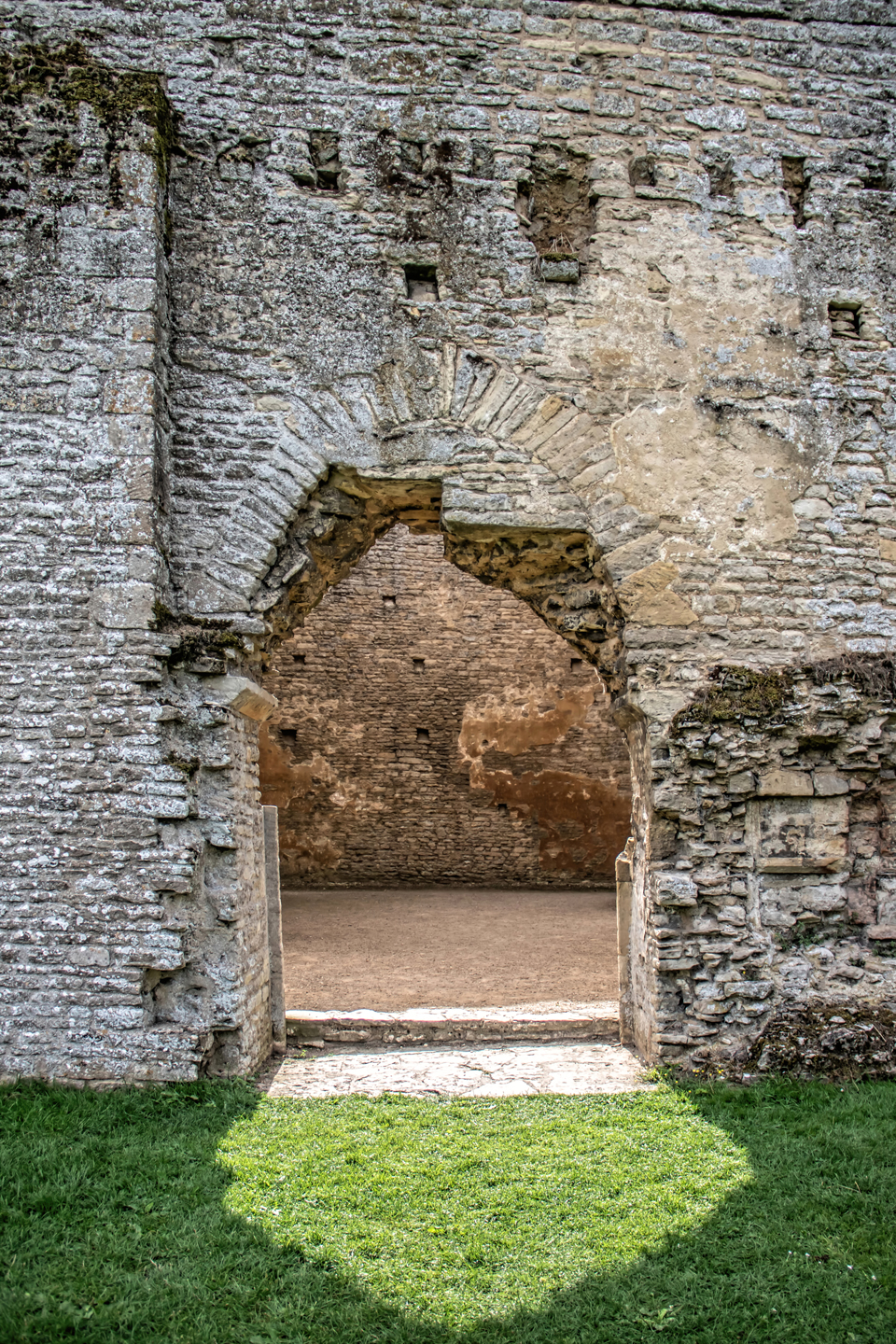
Minster Lovell Hall
This was our last stop on the Cotswolds tour. After a long day of quaint cottages and village streets, who wouldn't enjoy a good ruin?
The hall was built by William, Baron Lovell, in the 1430's. Unfortunately it didn't remain in the family for long; William's grandson Francis was a supporter of Richard III and after Richard's defeat at Bosworth, the property was seized by the Crown. It was abandoned and dismantled for building stone in the 1700's, and has been a ruin ever since.
Wednesday, May 22, 2024
Saturday, May 18, 2024
Reliefs
I do know that's Nike on the left; unlike most of those immortalized in stone at Ephesus, I had at least heard of her.
Labels:
archaeological sites,
Ephesus,
ruins,
Turkey,
Türkiye,
UNESCO World Heritage
Friday, May 17, 2024
Temple of the Sebastoi
I do remember this one.
Sebastoi was the Greek rendering of the Roman Augustus, so this temple honored the emperors. It was built in the first century AD for the Emperor Domition, but after his assassination in 96 AD, the Senate ordered his memory erased. His name was removed from inscriptions, his coins were melted, and the temple in Ephesus was renamed to honor emperors in general rather than Domition in particular.
Labels:
archaeological sites,
Ephesus,
ruins,
Turkey,
Türkiye,
UNESCO World Heritage
Subscribe to:
Posts (Atom)